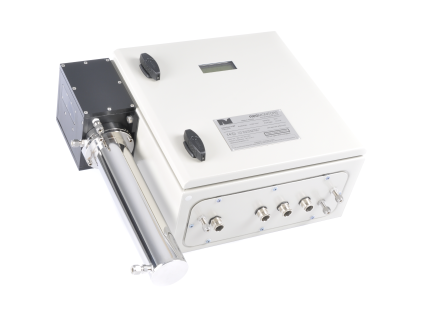
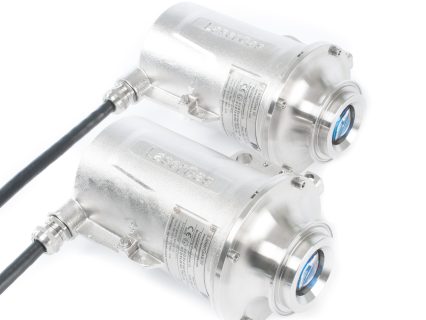
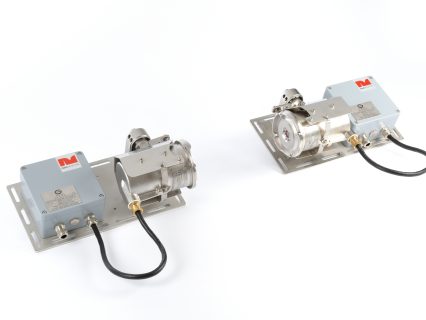
Hydrogen (H2) is emerging as a key component in the transition to lower-carbon energy systems. Blending H2 into Natural Gas networks can reduce the carbon intensity of the delivered fuel. However, H2’s lower volumetric energy content poses challenges related to combustion characteristics, leakage, materials compatibility, and pipeline operation. Therefore, accurately measuring H2 concentration is becoming increasingly important for utilities, refineries, and industrial users. Reliable monitoring helps optimize combustion performance, maintain fuel quality specifications, support pipeline integrity management, and control hydrogen blending ratios. This enables the safe and efficient operation of energy infrastructure as hydrogen plays an increasingly important role.
Advantages of TDLAS
For measuring species like hydrogen in Natural Gas, Tunable Diode Laser Absorption Spectroscopy (TDLAS) offers a proven, laser-based approach. Its selectivity and sensitivity allow it to detect trace components even in complex gas mixtures, while fast response times and multi-gas detection capabilities make it practical for continuous monitoring. Because it has no moving parts, maintenance needs stay low, and measurement accuracy and stability remain consistent over time, a combination that matters for modern gas monitoring applications.
Compared with competing techniques such as Thermal Conductivity (TC) detectors, Palladium (Pd) film sensors, and Raman spectroscopy, TDLAS offers several practical advantages.
TC detectors are robust but respond to the overall thermal properties of a gas mixture rather than to hydrogen specifically, which can produce cross-sensitivity to other components. TDLAS instead targets hydrogen’s unique spectral fingerprint, providing significantly greater selectivity than TC measurements.
Pd-film sensors can experience aging, poisoning, hysteresis, or drift over time, depending on operating conditions. TDLAS systems rely on optical components that hold calibration longer, which lowers operational costs and maintenance demands.
Achieving low detection limits for H2 with Raman spectroscopy typically requires higher optical power and more sophisticated instrumentation. This increases capital cost, system complexity, and the need for specialized safety design measures in hazardous areas.
With its direct measurement approach, TDLAS avoids these trade-offs, offering the specificity and sensitivity needed for accurate H2 monitoring without interference from other gases.
NEO Monitors’ solution
As a recognized innovator and patent holder in TDLAS-based H2 measurement with a strong portfolio of published research and industrial development, NEO Monitors combines deep technical expertise with proven analyzer technology. This commitment to advancing H2 measurement is reflected in the LaserGas™ II MP H2 extractive analyzer.
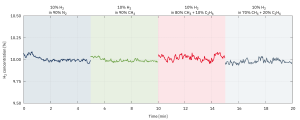
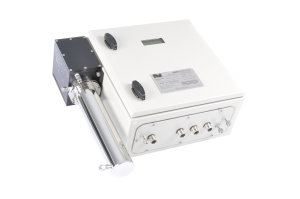
NEO Monitors’ LaserGas™ II MP analyzers are the benchmark for industrial TDLAS technology. With excellent detection limits and an unmatched dynamic range of four decades, they are the ideal choice for measuring H2 in Natural Gas and many other applications.
All LaserGas™ II MP products offer:
- Sensitive and selective
- Fast response time
- No drift of zero/span
- Continuous health check monitoring
- Low maintenance requirements
- High reliability and longevity
| Application | H2 in Natural Gas and other hydrocarbon mixtures |
| Typical range | 0 – 10, 0 – 20, 0 – 50, 0 – 100 % |
| Detection limit | < 0.05 %, typical 0.02 % |
| Typical precision | 0.01 % or 2 %rel |
| Cell pressure | 1.0 – 4.5 barA |
| Flow rate | 5.0 – 15 L/min |
| Response time (T90) | 15 s @ 10 L/min 3 barA |
Installation recommendation
For optimal performance and reliability, it is recommended to install the LaserGas™ II MP H2 analyzer indoors or in a temperature-regulated shelter. The analyzer is equipped with built-in temperature and pressure sensors so that there is no need to use external probes. The sampling system should include a particulate and oil filter, a flow regulator to maintain the necessary flow rate, and a backpressure regulator at the outlet of the cell to maintain the required cell pressure. The required cell pressure depends on the gas mixture and is usually specified by NEO Monitors. This information is also documented in the calibration certificate that is supplied with the analyzer upon delivery.
Further information
Avetisov et al., Sensors 2019, 19(23), 5313
Westberg et al., Optics Express 2025, 33(5), 11409
EP 3 724 640 B1 (NEO MONITORS AS), Gas Analyzer for Measurement of Hydrogen.
Precise Hydrogen Measurement in Natural Gas Networks